
Do you have an account?
Why create an account?
After creating an account you will :
- have access to the “favourites” feature,
- be able to download certain data published by RTE,
- have access to forms (PKI certificate, EIC code, Customer questionnaire - KYC),
- have access to notifications.
If you are an RTE customer, feel free to contact your administrator so that he or she can give you access to your company’s services.
From September 2026, RTE and Enedis will implement an experimental market for local network constraint management. The experiment relies on a dedicated platform, the “Portail Flexibilités”, and will run for two to three years. In its Deliberation No. 2026-161 of 22 July 2026, the CRE approved the market rules jointly developed by RTE and Enedis, which entered into force on 1 September 2026.
Beneficiaries
-
Market participants with generation, consumption or storage assets
Local Network Constraint Management
Operating transmission and distribution networks requires continuous monitoring of power flows and voltage levels at every network node. Unlike frequency, these are local parameters. Local modifications to active power injection or withdrawal may be required to relieve congestion. Procurement of this service for selected areas of the RTE and Enedis networks is carried out through the new Portail Flexibilités, in addition to the existing non-market mechanisms included in network access arrangements.
Through this new market, RTE and Enedis aim to develop new localized flexibility resources that can support the energy transition.
What is the Portail Flexibilités Experiment?
The Portail Flexibilités experiment is a joint initiative by RTE and Enedis. Its purpose is to test the use of market-based procurement of local flexibility services, namely active power modulation services, with or without capacity reservation, located at specific points on the grid.
Market participants may, before or after becoming a Flexibility Service Provider, assess the eligibility of their portfolio of flexible sites against the published requirements and trial areas on the Portail Flexibilités. If eligible, they may submit offers and participate in this emerging market.
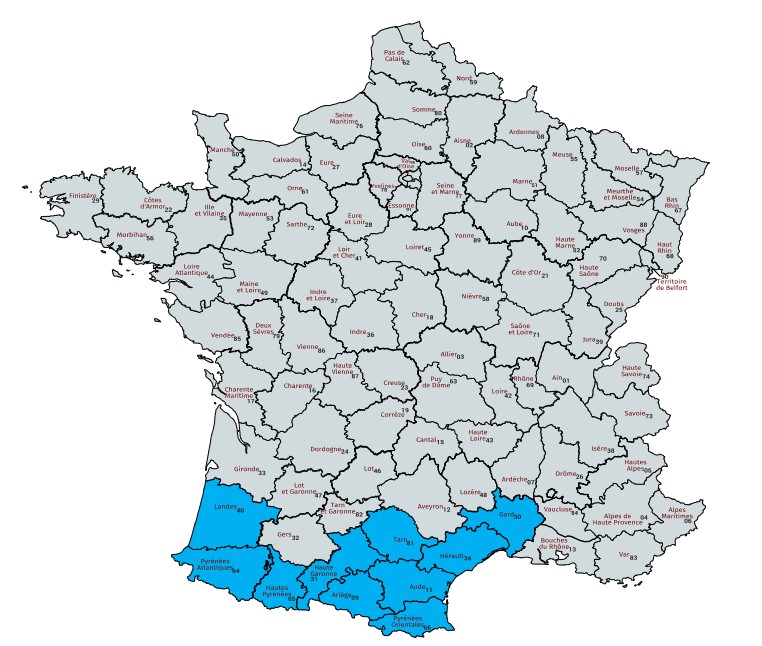
The experiment will initially be deployed across part of the RTE and Enedis networks in the departments of Landes, Pyrénées-Atlantiques, Hautes-Pyrénées, Haute-Garonne, Ariège, Tarn, Pyrénées-Orientales, Aude, Hérault and Gard.
The experiment introduces:
- a common rulebook approved by the French Energy Regulatory Commission (CRE) in its Deliberation No. 2026-161 of 22 July 2026 ,
- a single interface for onboarding, site registration, publication of local flexibility requirements and offer submission openning soon
- enhanced coordination between RTE and Enedis.
The experiment is expected to last at least two years from September 2026 and up to three years.
What Is a Local Flexibility Offer?
RTE and Enedis will procure local flexibility services. But what exactly does this mean?
Local flexibility services may be provided with or without capacity reservation
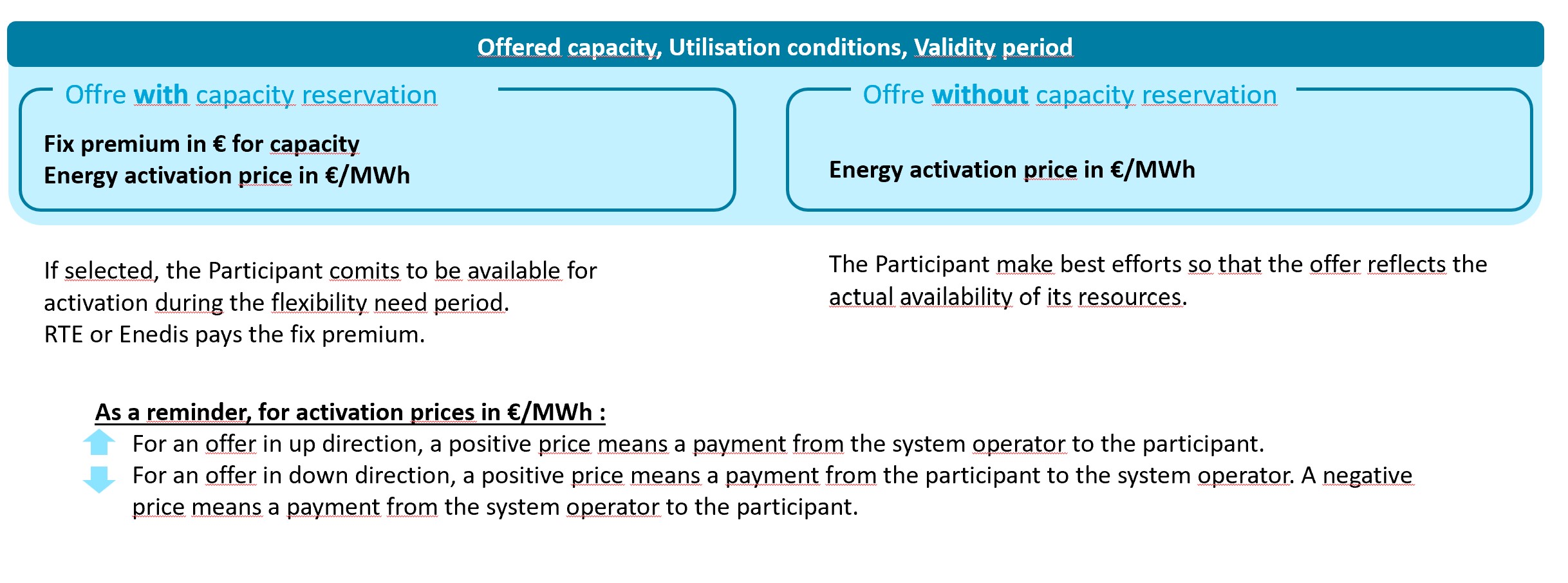
For capacity-reserved services, RTE or Enedis procure capacity several weeks or months ahead of delivery.
For non-reserved services, offers may be submitted up to a few hours before the start of the requirement period.
Local flexibility services may relate to either the transmission or distribution network
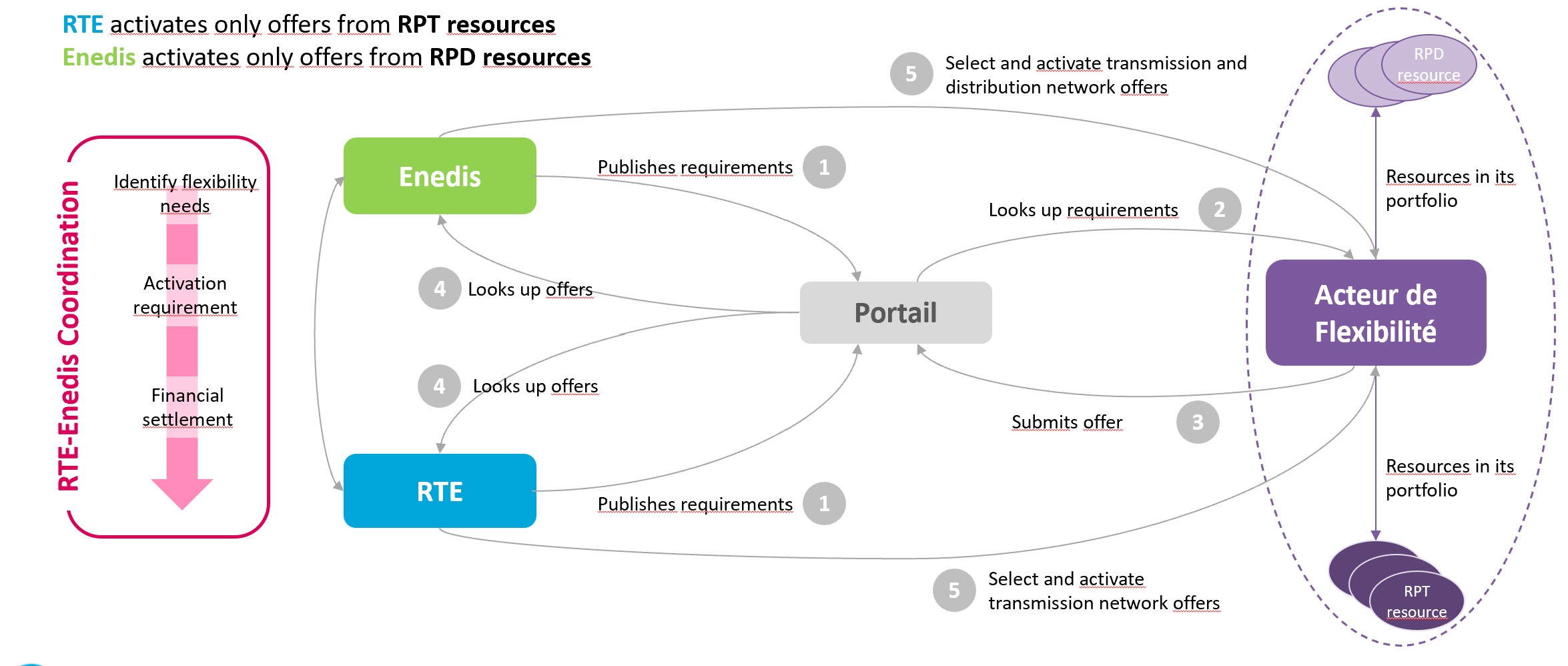
Local flexibility requirements, published by RTE, can only be met by eligible transmission-connected sites.
Local flexibility requirements, published by Enedis, can only be met by eligible distribution-connected sites.
However, Enedis may publish distribution network requirements intended to address a transmission network constraint. As a result, distribution-connected sites may contribute to resolving constraints on the transmission network.
How Are Local Flexibility Offers Activated During the Delivery Day?
Activation procedures differ depending on whether the offer relates to the transmission network (RPT) or the distribution network (RPD).
Become a Flexibility Service Provider
Any participant wishing to become a flexibility service provider must submit an application through the Portail Flexibilités. Following validation of the application, the participant may proceed with the signature of a tripartite Participation Agreement (PA) with RTE and Enedis.
The list of supporting documents is available in the Experimental Market Rules and on the Portail Flexibilités website.
Participants must hold a valid EIC code in order to become a flexibility service provider. If you do not already have one, you may apply through the dedicated online form.
The entire Participation Agreement signature process is managed through the Portail Flexibilités.
 Once the Participation Agreement has been signed, flexibility service providers can:
- Consult published requirements;
- Import their portfolio of sites;
- Begin submitting local flexibility offers.
Reference Documentation
- Portail Flexibilités : soon available
- Experimental Rules of the “Portail Flexibilités” Local Flexibility Market
Additional Information
- Participate in the Balancing Mechanism – RTE Services Portal
Contacts
For any subscription request or further information, please contact:
- The EPEX Market Operations mailing list; localflex.ops@epexspot.com
- RTE Local Flexibility market team: rte-marches-flexlocales@rte-france.com
- Enedis Local Flexibilities team at: dct-flexibilites-ras@enedis.fr